Sweet Potato and Black Bean Soup

This recipe comes with deepest apologies to the pastor of St. John’s Presbyterian Church. Last Sunday, as Fred and I sat dutifully in worship, I wrote out a new recipe for a sweet potato and black bean soup on the church bulletin instead of thinking about Mark 6:45-56 and Jesus walking on water.

Some might say I should apologize to God instead of the minister for this kind of behavior. But God knows better than anyone that while you can always get a copy of the sermon, you can’t always remember a good recipe idea.

And if you want proof that God favors those who care about food, I discovered the North Carolina Sweet Potato recipe contest while I was doing a little online research for this blog posting, just in time to enter the contest before tomorrow’s deadline. Frankly, I don’t see how the judges can NOT pick a recipe that was originally written out on a church bulletin (even if that bulletin serves as proof that the recipe creator was not paying very much attention to the sermon).

The idea for the dish was not actually triggered by anything in the service but by a recent potluck dinner, where one of the guests brought a dish with sweet potatoes, black beans, rice and chicken. I had been wanting to make something interesting with the Carolina Ruby sweet potatoes sitting on my counter, the only ones from Whole Foods that were under $2 a pound.

My constant carping about Whole Foods and their prices aside, our unit on Ninth Street is certainly a friend to North Carolina’s sweet potato farmers–a good thing, since the state produces forty percent of the sweet potatoes grown in the US and is the country’s number one producer. On any given day the store will feature up to five different varieties, including purple ones.
We’d already enjoyed two of the Carolina Ruby potatoes served mashed with a little butter, but the remaining two deserved a more exciting end. Here’s what I came up with–a combination based in part on the potluck dish and part on a Cuban-style black bean soup I’d tried years ago. The dish is unexpectedly but pleasantly spicy, which complements the sweetness of the potatoes. To me it’s a welcome change from our Southern tendency to smother these wonderful vegetables with sugar and pecans. After all, there’s a lot more to a sweet potato than the sweet.
Here’s hoping the North Carolina Sweet Potato Commission will like this recipe as much as we did.
Sweet Potato and Black Bean Soup
Makes about 2 1/2 quarts, or 6 – 8 servings

2 tbsp. extra virgin olive oil
1 medium onion, diced (about 1 cup)

3 large cloves garlic, minced (about 1 tbsp.)
2 large sweet potatoes, peeled and cut into 1/2″ cubes (about 6 1/4 cups)
4 cups chicken broth (homemade or low-salt)

2 1/2 tsp. cumin
1 tsp. ground coriander
1 tsp. thyme
2 medium-sized bay leaves
1/2 tsp. hot red pepper flakes (add more or less to taste)
2 tsp. salt (or to taste)
3 tbsp. fresh squeezed lime juice (do not substitute concentrate)
2 cans black beans, drained
1 c. crushed tomatoes
1 c. evaporated milk
Chopped fresh cilantro for garnish (optional)

Heat oil on medium high heat in large pot. Saute onions until translucent, about 3 minutes. Add garlic and stir. Add sweet potatoes, broth, and spices. Cover and turn heat to high, bringing to boil. Reduce heat to medium low and simmer until potatoes are becoming tender, about 5 minutes. With potato masher, mash potatoes briefly, crushing into smaller pieces but not pureeing–there should still be distinctive pieces of sweet potato in the soup, but crushing them will distribute the flavor throughout the dish.

Add remaining ingredients except evaporated milk. Cover and cook until potatoes are very tender, 5 – 10 more minutes. (At this point, soup can be frozen. When ready to serve, thaw and finish according to instructions.) Add evaporated milk. Cover and continue to simmer until flavors are blended, about 45 minutes to 1 hour. (The soup’s flavor continues to improve the longer it sits and is better the next day.) Correct seasonings and garnish with cilantro if desired. Let cool slightly before serving.

Roast Beef with Coffee and Red Wine

Fred and I are officially sick of this recession, but the cats are thrilled: after Louise’s recent $437 dental extravaganza we can’t take any more of them to the vet for a while. Since we can’t afford to go out much in the evenings, our laps serve as cat-warming meditation pillows, ideal for contemplating ways to destroy rolls of toilet paper or the next spot for a good hairball incident, preferably in a high-traffic area frequented by bare human feet at the darkest point of the night.

As our house in Atlanta languishes with no buyer in sight, food remains the best of comforts for the feline and human residents of the Wise household. The roast beef I made over the weekend was a great example–a relatively inexpensive cut of meat braised in coffee and (cheap) red wine. We felt like royalty carving it and serving it with the luxurious sauce. The flavor of the sauce is unusual, most closely resembling a rich, smoky, thick au jus, with just the slightest hint of sweetness from the molasses.

The recipe is a modified version of an Italian dish. (I know it only as beef braised in coffee.) The sauce in the original version was lopsided to me when I first made it, lacking depth, so I added chili powder, cloves, molasses, a tiny bit of garlic, and a little tomato. The result was a great variation on the original, one we’ll definitely try again.

The cats also like the little bits that “fell” on the floor.

Roast Beef with Coffee and Red Wine

4 lb. rump roast, tied
2 medium onions, thinly sliced
3 tbsp. butter
Kosher salt and freshly ground pepper
3/4 c. strong brewed coffee
3/4 c. red wine
1 tsp. chili powder
1/4 tsp. cloves
2 tbsp. molasses
3 tbsp. crushed tomatoes
1 small clove garlic, minced

Preheat oven to 325. Melt butter on medium heat in Dutch oven or oven-proof pot large enough for roast. Add onions and saute until translucent, about 5 minutes. While onions are sauteeing, rub roast with generous amounts of salt and pepper. Push onions to one side of the pot. Add roast to the side of the onions, browning lightly on all sides, about 3 – 4 minutes per side.

While roast is browning, mix together remaining ingredients. Turn off heat. Turn roast so that fattiest side is on top. Pour wine/coffee mix over roast. Use tongs to move roast back to center of pot; redistribute onions evenly throughout liquid, placing some on top of the roast. Cover and bake for up to 3 hours for a well-done roast and longer if you want it falling-apart tender. If you prefer a rarer roast, cook until meat thermometer inserted in roast reads 160 degrees; begin testing after about an hour and a half.

Carbonara with Spinach

Our lives at present consist primarily of work, work, and more work. Cooking remains a source of great joy and pleasure, but I can’t seem to find the time to write about it.

But no matter how bad things are, I can always conjure up a dish of carbonara. If you too are slaving away during the hatefully termed “current economic crisis,” a big bowl of carbonara will offer more comfort than an entire case of three-buck Chuck.

The basic dish consists of pasta coated with eggs, with pork, salt, pepper, and grated Parmesan cheese added. Many recipes also include scallions, garlic, and other vegetables. In traditional Italian versions, the pork is usually guanciale or pancetta. As I’ve indicated in previous posts (found here and here), guanciale is nothing short of heaven, a symphony of pillowy fat, and makes a spectacular carbonara. Pancetta is fine as well, but it’s not quite as flavorful–and with a lower fat content, it’s not as much fun. 

Guanciale and pancetta, however, have the disadvantage of being expensive and sometimes hard to find. When this is the case, bacon will make an acceptable substitute. My Italian friend Claudia, who taught me how to make this dish when she lived in the U.S. for a year, used bacon when she made it here, so I figure it’s okay.

Secretly, of course, I love carbonara with bacon the best. In this version I’ve also added fresh spinach and mushrooms in an attempt to get some vegetables into Fred. I was pleased with the results. The spinach added a nice, slightly crunch texture to the dish, and I love the way the nutty flavor of mushrooms complement the bacon and the Parmesan.

American Carbonara with Spinach

2 large servings

1/2 pound pasta of your choice (anything except the small pastas like orzo or orecchini will work)
6 – 8 slices good quality bacon, cut into 1″ pieces
2 fresh eggs (eggs are not fully cooked in this recipe so do not use commercial–find organic, cage-free, or best of all local farm-grown eggs to keep risk of Salmonella low)
1 tbsp. cream or half and half
1 tbsp. grated Parmesan cheese
2 cups fresh baby spinach, washed and dried
Salt and freshly ground pepper to taste
Extra fresh grated Paremsan for topping

Put salted water for pasta on to boil. Meanwhile, fry bacon in large skillet on medium high heat until just crisp. Turn heat down to lowest possible flame, leaving bacon in skillet.

When water comes to boil, add pasta and stir.

While pasta is cooking, separate eggs into small bowl, leaving a little bit of the white with each yolk. Whisk in cream, Parmesan cheese, salt, and a generous amount of freshly ground pepper. Measure out spinach and set aside.

When pasta is al dente (still firm when you bite down on it, not mushy), drain it. Immediately return to cooking pot. Quickly pour egg mixture over pasta and stir. Spoon out bacon from skillet (you will want to get a tablespoon or two of the bacon fat also) and add to pasta. Add spinach, stir well, and cover for 5 minutes or so, until spinach is slightly wilted.

Serve pasta in large bowls and top with additional freshly ground pepper and Parmesan.

French Lentil Salad

The winter rut has been hitting hard over the last few weeks. You can eat only so much kale, roast, and potatoes before you start longing for plums, or a peach, or a tomato. But good luck finding plums or peaches that aren’t tasteless balls of concrete or a tomato that has more flavor than the box it came in.

Last Saturday, then, I found myself roaming the aisles of Whole Foods for novel fare, carefully adding up each item as I placed it in my basket, trying desperately not to exceed our miserly monthly food budget with the purchase of a fillet of fish or a single Meyer lemon.

In the spirit of cash-strapped shoppers everywhere, I trotted over to the rice and beans in the bulk aisle. There, after buying some arborio rice at $2.49 a pound, I found these lovely little French lentils (also $2.49 a pound). Feeling wildly indulgent, I poured two pounds of each item into an ecologically disastrous plastic bag (happily noting the irony that I’d brought a canvas bag to carry home my groceries).

These French lentils were a joy to prepare and eat. Not only do they look like tiny pebbles, but they also hold their shape nicely when cooked–making them ideal for salads when other lentils can be easily overcooked and fall apart (much like I did when I realized that I’d managed to blow ten bucks on rice and beans). They also have a nuttier flavor than other lentils, so they require very little seasoning to add a little culinary spark to a dish.

I cooked two cups to start, pulled out a cup or so partway through the process to make a salad and letting the rest simmer a little longer to soften them for a soup. The salad turned out to be the perfect winter meal–hearty enough to satisfy on a cold day but offering a welcome hint of summer.

French Lentil Salad

Note: Adjust amounts as needed to suit your taste; I feel silly offering a recipe for salad in the first place. These portions will serve 2 as a meal.

1 cup French lentils
3 cups water, and more as needed
4 mushrooms, sliced
2 cups fresh baby spinach leaves
1/4 cup olive oil
Kosher salt
Fresh ground black pepper

Sort and rinse lentils. In a medium saucepan, bring lentils, about 1 tsp. salt, and water to boil. Reduce heat. Cover and cook 20 – 25 minutes, until lentils just become soft. Drain lentils and rinse in cold water for a few seconds, until they are warm but no longer hot. Allow lentils to continue draining while you prepare the rest of the salad.

Toss spinach, olive oil, and kosher salt to taste in a large bowl. Slice mushrooms and add to salad, then lentils. Place in serving bowls and top with more salt, if desired, and fresh ground black pepper.

Best Bread in the World on a Snowy Weekend

Go ahead and mock us Southerners for shutting down over the 6 or so inches of snow that fell here on Saturday. We’re happy to take a sabbath, close up, hunker down, tuck ourselves in and enjoy a pleasant winter day snugged up in our house, baking, reading, and napping.

Cleo, never satisfied just to stay safe in a warm house, mewed so desperately to get out on Saturday that I decided to let her venture forth.

Obviously, she didn’t get far.

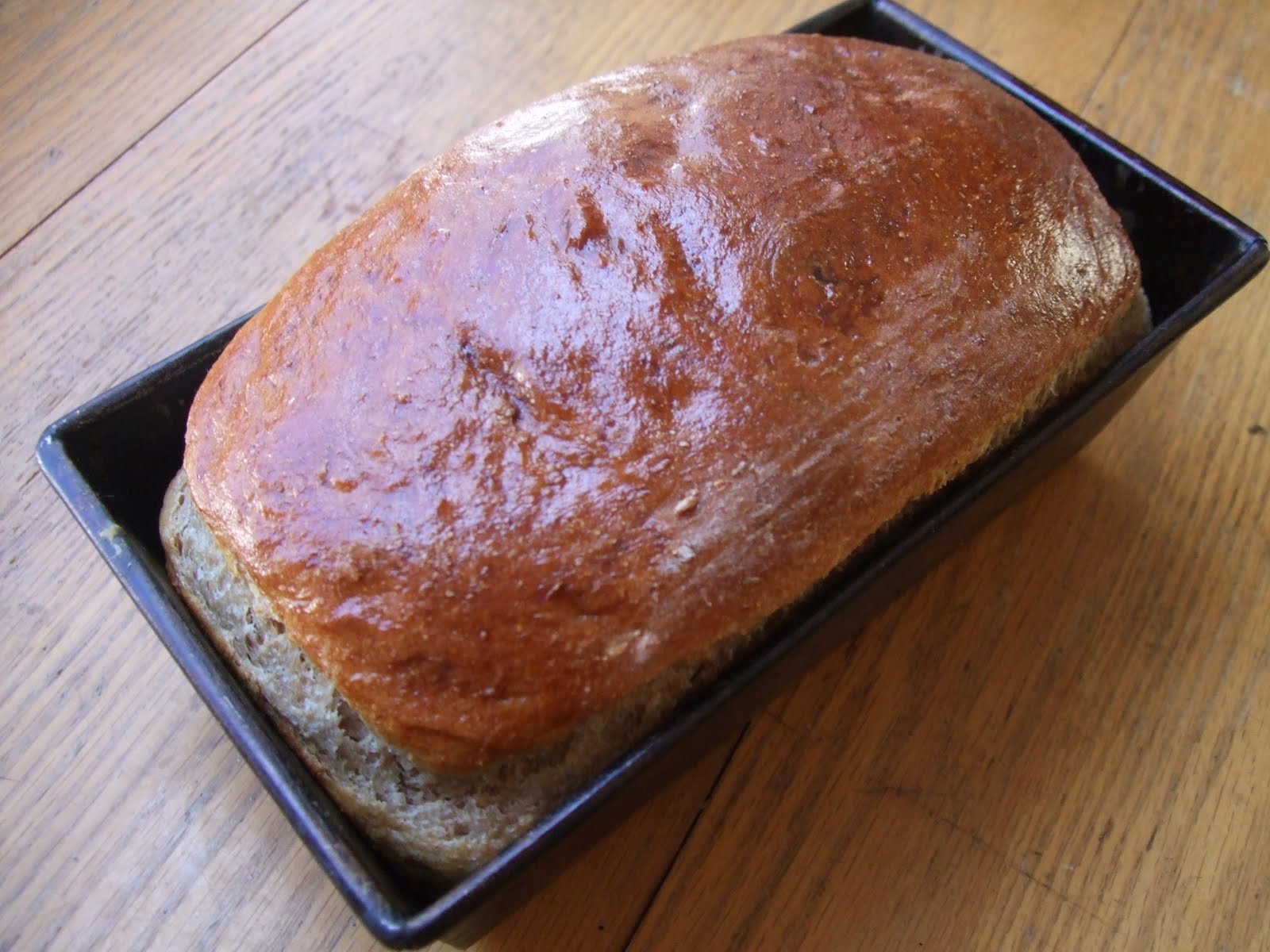
And anyway, I don’t understand why anyone would have wanted to leave the house this weekend. I baked like crazy, including this loaf of bread.

The recipe claims that this is the “best bread in the world.” That depends on what you like in a bread, of course. If you like a crusty loaf this one won’t satisfy, but its soft and tender crust makes it perfect for sandwiches. I find its sweet and nutty flavor very appealing.

The recipe is quite forgiving in the portion of wheat to white flour. In fact, I accidentally reversed the portion of white and wheat flour in the original recipe, and I like the change so much I kept it here. 

Best Bread in the World 

Makes 2 loaves

2 cups boiling water
1 cup uncooked oatmeal
1/3 cup lukewarm water
2 tbsp. yeast
1 tbsp. salt
1/2 cup honey
2 tbsp. butter
3 cups whole wheat flour
1 cup white flour
1 egg yolk plus 1 tsp. water

Pour boiling water over oats in large bowl. Add salt, honey, and butter, and stir. Let stand until softened, butter has melted, and mixture is lukewarm.

Stir yeast into lukewarm water and let it dissolve. (I usually give it a stir until the lumps are gone.) Add to oat mixture. Gradually add flour, stirring with wooden spoon, until a soft ball of dough forms. It should stay together easily when you gather it together with your hands.

Generously flour kneading surface with white flour. I like to use a non-fuzzy cotton towel, like the ones made from flour sacks. Knead dough until smooth and elastic. The instructions say to do this for 10 minutes but it never seems to take me this long. Dough will be ready when it doesn’t “fold” over easily during the kneading process and it springs back in your hands. Don’t clean kneading surface unless required for another task–you will use it one more time.

Oil a large bowl and add dough, turning it to coat with oil on all sides. Cover with a towel and let rise for 1 hour or until doubled in size.

Oil 2 loaf pans. Punch down dough and divide in two. Knead each half briefly and shape into loaves. (You can clean your kneading surface now!) Place loafs in pans. Cover and let rise until pans are full. Preheat oven to 350.

Beat egg yolk lightly with the teaspoon of water. Brush surface of each loaf with egg mixture. Bake 35 or 40 minutes.

Turn loaves onto rack and let cool slightly, if you can resist, before slicing. Loaves will freeze well.

Quinoa, the Outcast Indian Maiden

The increased budgetary restrictions imposed by our unwilling ownership of two houses are leading us down some interesting culinary paths. Our latest discovery is quinoa (pronounced KEEN-wah), a South American seed that cooks up into a nutty, flavorful, and filling side dish. I’d heard of it for years but never ventured into making it myself until recently. We found a supply at Costco, ample evidence that it’s made the leap from the Birkenstock and brown rice crowd into the Land of Wal-Mart.

As for the taste, if couscous and brown rice got married and had a baby, it would be quinoa. When cooked, the seeds are roundish like couscous, but the flavor more closely resembles brown rice. We’ve taken to calling this grainy love child “Quinoa, the Outcast Indian Maiden” in honor of Eudora Welty’s bizarre little short story, “Keela, the Outcast Indian Maiden,”  and it’s made many an appearance on our dinner plates as of late.

Here’s a recent, simple version with just onions and garlic, served with a smoked paprika fish.*

*Unfortunately I can’t reproduce the smoked paprika fish recipe, which was thrown together using the juice from Rick’s Pick’s Smokra, a spicy pickled okra heavily infused with smoked paprika. With Smokra at $10 a jar, I try to use every bit of it the few times of year we indulge. A cheaper version of the fish with smoked paprika, garlic, and vinegar is in the works but is not ready for publication.

Like its imaginary parent couscous, quinoa seems to be a very forgiving grain–that, or I’m cooking it badly but liking it anyway. The basic cooking method is two parts water to one part quinoa. You put it in a saucepan, cover, bring to boil, then simmer with the lid on for 15-20 minutes. Taking the lid off and checking it on occasion does not seem to hurt it, nor does my occasional obsessive-compulsive stirring. The instructions on our bag tell you it’s done when “a white spiral-like thread appears on each grain,” and they  also suggest toasting the seeds in a dry skillet before cooking to bring out the nutty flavor. I tried both the toasting and the non-toasting methods and was fine either way. The recipe below omits the pre-toasting.

Quinoa also appears to be a versatile grain, capable of functioning as a breakfast cereal with fruit and nuts or as a vegetable side dish, but not being breakfast eaters we’ve tried only the latter. My favorite has been the recipe below, which is a heavily modified version of the one on the back of the bag. This makes a gentle and unassuming side dish; in fact, if your favorite chicken soup could be transformed into a solid, this would be it. (The chicken broth helps.) It’s a nice accompaniment to just about any basic dish, from roast chicken to broiled fish to pork chops.

Quinoa is an outcast no longer. 

Quinoa with Carrots, Celery, and Onion 

Serves 4 as a side dish

1 tablespoon oil (olive or vegetable)
1 medium onion,  chopped
2 – 3 cloves garlic, minced
1/2 cup carrots, peeled and minced
2 stalks celery, chopped fine
1 tbsp. thyme or herbes de Provence
1 cup dry quinoa
2 cups homemade chicken or turkey broth
Salt to taste

Heat oil in large saucepan on medium-high heat. Add onion and saute until translucent. Add garlic and stir. Add carrots, celery, and thyme and saute until just tender, about 5 – 10 minutes. Add quinoa, water, and salt and stir. Cover and bring to boil. Reduce heat and simmer, covered, for 15-20 minutes, until water has evaporated and quinoa is fluffy, with white spiral-like threads on each grain.

Possibly the Worst Recipe Ever

I’ve lately rediscovered the Treasury of Tennessee Treatsa cookbook put out by grandmother’s church, Keith Memorial United Methodist in Athens, TN. It was first issued in 1957, and my copy is the revised version from 1962. It is so battered that the index, long detached from the binding, is stuffed into random pages throughout. The two pages of pecan pie recipes look like a Jackson Pollock painting.

The book is a testament to small-town life of the late 1950s and early 1960s, when time-honored but time-consuming ways of cooking were slowly giving way to modern convenience foods. There are many gems here–black bottom pie, dozens of lovely cakes, wild goose with apple and sweet potato stuffing, quail pie, chili, stew. But you can also see how cooks like my grandmother were being seduced by the siren song of convenience foods, luring them down some dark paths lined with canned asparagus and cream of mushroom soup.  

The recipe below represents the worst excesses of the era. It’s hard to imagine a combination more hideous than marshmallows, jarred pimento cheese, and Maraschino cherries. But the cooks of Athens, TN, must have been fascinated by the exotic wonder of this salad–which contains real whipped cream only, I am sure, because Cool Whip was not invented until 1966.

I have serious doubts that anyone from Los Angeles ever made this. My guess is that it was some Southern cook’s way of getting back at a snooty California relative.

Los Angeles Salad

1 1/2 lb. marshmallows
Small can crushed pineapple
10 Maraschino cherries
1 4-oz. glass pimiento cheese
1 cup whipping cream

Mix cheese and whole can of pineapple. Add cherries and juice, and marshmallows, cut in small pieces. Whip cream. Add to mixture. Place in ice tray four or five hours. Serve with mayonnaise.

Vegetarian Boston Baked Beans

Every winter the urge for Boston baked beans comes upon me, and with the holiday weekend I decided it was time to make them again. Not able to find my own recipe–a meatless version I cobbled together during my six-month vegetarian phase in 1987–I turned to dear, reliable James Beard.

But I was dismayed to discover that my beloved Beard did not like Boston baked beans: “The worship of Boston baked beans,” he writes, “is a mystery to me, since my palate cannot reconcile the sweetness of syrup or molasses and the simple hardy flavor of pork and beans.”

My palate has no problem with this, and it should be no mystery why a nation that adores honey roasted peanuts and chocolate covered pretzels would love the salty-sweet combination offered in this dish. The traditional version calls for salt pork, which adds a rich, flavorful smokiness. Not having any salt pork on hand, I considered using the applewood smoked bacon in our freezer. Bacon that costs $8.00 a pound,  however, deserves a more prominent place in a recipe. And with no extra cash in our budget this month, I couldn’t spring for even a few ounces of salt pork. So it was back to the vegetarian version.

Beard’s recipe called for maple syrup, which I knew was not part of the recipe I’d lost. So I left him to huff over America’s proletarian taste buds and turned instead to Fannie Farmer (13th edition), where I found what looked like the right proportion of sweetener (in this case, molasses) and dry mustard. I also liked her addition of brown sugar, since the organic molasses on my shelf–bought in desperation one day at Whole Foods–has a bitter taste. The addition of onions, garlic, and extra kosher salt adds enough flavor to make up for the lack of salt pork. Almost.

But perhaps the best part of making Boston baked beans is that I get to use my grandmother’s bean pot–a simple brown clay vessel that she never used much but which looks great on the shelf, like you really know what you’re doing in your kitchen.

 Vegetarian Boston Baked Beans

3 tbsp. canola or vegetable oil
1 medium onion, finely chopped
3 cloves garlic, minced
2 tsp. kosher salt
2 cups white beans (navy or Great Northern)
2 tbsp. dry mustard
5 tbsp. dark brown sugar
4 tsp. molasses

Soak beans in water overnight or use short method. For short method, place beans in a covered pot with water twice the depth of the beans. Bring to a boil. Cover and let sit for one hour, then follow directions below.

Preheat oven to 300. Drain beans, reserving liquid. Put beans in bean pot or tall casserole dish. Saute onion in oil on medium high heat. Add garlic and stir. Remove from heat. Add to bean liquid along with remaining ingredients and stir until mixed. Pour over beans.

Bake 6 hours, checking every hour or so to make sure there is enough liquid in the pot. I like my beans to be coated with a gooey, sugary paste, so I typically don’t add water. If they begin to reach this state before the last 30 – 60 minutes of cooking, however, more water should be added to keep them from drying out.

Warm Food for a Chilly New Year

We are back for 2010, after a long vacation over Christmas that included our third wedding anniversary and a week in Jackson Hole, WY, with family. We limited the possibility of injury by sticking to snowshoeing. Fred also took his first cross-country ski lesson, during which they taught him to fall down. He was so pleased that he practiced falling down quite a bit thereafter, and seems to have mastered the technique quite well. 

I was also reminded why I married him, because he is the only man I know who would bring a copy of Poetry magazine on a snowshoeing excursion. (I post this photo as a tribute to Ruth Lilly, the benefactor of the magazine, who died while we were on the trip.) 

Returning to Durham, we were surprised to find the temperature was very nearly the same as it had been in Wyoming. The cats responded appropriately. See if you can spot which one made herself at home in our sweater drawer.


And finally, I made this delicious pork and bean soup. I post it despite my concern that it’s not possible to replicate it. For starters, the broth I used was from a Cornish game hen I roasted over Christmas. The hen was stuffed with sage dressing, and the flavors may have infused the broth. 

Second, the pork came from a container of pulled pork “barbecue” from Whole Foods. As barbecue, it was lousy–tender but lacking anything in the way of zip, zing, or flavor. Not even worthy of a sandwich, it was heartlessly tossed into the pot, where it took on a new life so tasty that it may convince me to buy it again for the sole purpose of making this soup.

Pork and Northern Bean Soup

Makes 3 – 4 servings

About 1 quart chicken or other poultry stock
1 medium onion, chopped
3 – 4 cloves garlic, minced
1 cup dry Great Northern beans
1 cup small carrots, sliced
1 tbsp. herbes de Provence (could substitute a mix of sage and thyme)
1 cup mild pork barbecue, shredded or chopped*
1 small can evaporated milk, or more to taste
Kosher salt and pepper to taste

*Note that this is North Carolina-style barbecue, which is vinegar based and uses no tomato. If this type of barbecue is not available, I would substitute leftover smoked pork shoulder, pork chops, tenderloin, or even ham.

Put enough chicken stock in bottom of soup pot to cover and saute onion on medium high heat. Add garlic and stir. Add beans, remaining chicken stock, and a large pinch of kosher salt (a teaspoon or so–it really does not matter as long as you don’t overdo it, since seasonings will be corrected at the end.) Bring to a boil and let boil for 1 -2 minutes. Cover, reduce heat to medium low, and let simmer until beans are just tender, about 1 1/2 to 2 hours. Check every half hour or so; add water or more stock if liquid level begins to get low, enough to keep ingredients well covered. Add carrots and herbes de Provence. Cover and continue to simmer until carrots are tender, 15 – 30 minutes. Add pork and evaporated milk and stir. Remove from heat immediately or when soup is sufficiently warm; do not overcook the pork. Add more salt to taste and pepper if desired. Serve immediately.