Pork Belly at (the) Federal

Our gluttonous streak continued last week, as the fried chicken extravaganza was followed by a pork belly blowout at the Federal.*

Federal remains our favorite Durham restaurant, and has become the site of a weekly post-Weight Watchers pilgrimage, where Fred can order his beloved pork sandwich with cheese and jalapeno peppers and I can sample the Federal’s many fascinating specials.

One special that’s eluded me since I arrived in Durham has been the pork belly (a cut of meat from the pig taken from the underside–essentially uncured bacon). It was on the menu on our very first visit, during a heady six-month period last winter when every foodie in America (including me) could seem to think of nothing else besides little piggy undersides. That night, so many of us had descended on the Federal that there was none left for me, and I had to content myself with the carnitas.

Those carnitas began our love affair with the Federal, but in our weekly visits over the past year pork belly did not make another appearance until last Monday.

I was thrilled and worried. The reasons for the thrill should be obvious. The worry, though, grew out of my struggles through what is coyly known as “maintenance” in Weight Watchers–the tortuous battle to keep off those pounds your body so desperately wants back, the battle you will wage for the rest of your life if your idea of a good time is to eat pork belly while reading a book, preferably with a cat on your lap.

That day, the Weight Watchers scale had revealed a 1.2 pound gain. So I made a compromise: I would order the pork belly, but I would eat only half of it and save the rest for lunch.

You know what happened. I was utterly unprepared for how greasily good that pork belly would be. It had been roasted with a slightly sweet, jerk-style rub and was served with chopped sweet potatoes roasted with onions. The meat itself was achingly tender, each of the four slices containing a quarter-inch layer of creamy fat. I don’t know if the sweet potatoes and onions had been cooked alongside the pork, but it tasted that way.

After eating two slices and half the potatoes, I should have stopped. I should have asked for a box right there. But, I rationalized, how well would this dish heat up? The meat would overcook. The potatoes would lose their succulence. The glorious perfection of the moment would be lost. Carpe diem, I said to myself, and dug right back in.

*It’s probably a good time to note the longstanding cultural debate over how to refer to this article-defying restaurant. A few months ago, a friend told me that since it’s called “Federal,” I should say “Federal” and not “the Federal.” I thought this was nuts–surely a bizarre whim concocted in the picky brain of an overly scrupulous English major.

So I asked Laura, our favorite server, to give me some guidance.* She prefered “the Federal.” Brimming with triumph, I conveyed the news to my friend, who calmly responded that Durham residents who were around when (the) Federal first opened, and was known as Federal, find it hard to change. Naturally, the very next day, a friend at church said, “We should go to Federal sometime!” I wish just once I could be right about something.

*Of course, only the picky brain of an overly scrupulous English major would even think to formulate these questions. Or write about them.

The Wages of Gluttony

It’s a good thing Durham is indeed buried in two, maybe even four inches of snow. Last night Fred and I went on a fried chicken extravaganza that rendered us nearly motionless, barely able to drag our churning stomachs out of bed this morning. I think I consumed roughly two cups of gravy alone.

I would offer the recipe here, but all I can say at this point is that I have not cooked a really great batch of fried chicken since the late 1990s. Even Fred’s well-honed frying instincts failed us. At one point, we found ourselves staring in bewilderment at a meat thermometer sticking out of a slightly blackened thigh in gently roiling oil, as the temperature read a good 60 degrees lower than “done.”

We’ve decided that we need to try Fred’s grandmother’s technique, in which you reduce the heat immediately after placing the meat in the skillet. Unfortunately, I don’t think we’ll be up to eating fried chicken again until 2011.

Cheap Pork and Turnip Greens

Coupon clipping is beginning to take a toll on me. This morning, I rushed off to CVS to get the Puffs Plus Tissue with Lotion on sale for 97 cents a box before Durham was buried in 2 inches of snow. Even worse, I found myself saying things like this to the clerk: “Your flyer says this item was $2.99, so why is the price $3.99 here?” Or, “Don’t I get this free if I buy 2 items at the regular price?” The clerk glowered as she scanned my coupons, making it clear that she wanted to shove them somewhere besides the cash register. But I didn’t care. I saved $30.

But I worry that my newly discovered frugality may affect my cooking. Being a selective cheater when it comes to making things from scratch, I follow a set of inner rules that only a tax attorney could sort out. Yes to Brummel and Brown, Hamburger Helper, and pre-packaged sushi. No to canned soup, spaghetti sauce, and anything made by Swanson except chicken pot pie. No to canned biscuits (well, most of the time).

Now, the coupon world is ALL ABOUT pre-packaged foods. Coupons are the manufacturers’ way to lure us into trying their latest product, from frozen Texas toast to banana-flavored Cheerios (I am, unfortunately, not joking). You can’t find coupons for organic radishes, or prosciutto, or local butter. So I’m straining a bit, trying not to lower my standards and buy frozen pizza sticks just because they’re 99 cents a box.

The good news is that seasonal ingredients do tend to be cheaper. So here’s a wonderful recipe for a dish we had just the other night, made of items purchased at a decent sale price, with not a single canned good involved.

Pork Tenderloin, Turnip Greens, and Mushrooms over Pasta

Serves 2

1/2 lb. long thin pasta (spaghetti or spaghettini, linguini, etc.)
1 large onion, halved and sliced thin
4 cloves garlic
1 tsp. (or more) olive oil for sauteeing
1/2 pork tenderloin, fresh or leftover (about 4 – 6 oz.), sliced lenthwise, then into thin strips about 1″ wide
12 – 16 leaves turnip greens, cleaned, ends trimmed, sliced into thin strips
To slice, lay about 6 leaves on top of each other, roll up tightly, then slice at 1/4″ intervals
4 -6 mushrooms, halved and sliced thin
1 tsp. crushed red pepper (or more to taste)
Salt and fresh ground pepper to taste
Fresh grated parmesan cheese

Put water for pasta on to boil and prepare according to package directions. Heat olive oil in skillet on medium high heat. Add onions and saute until translucent. (Add water or more olive oil if they begin to brown.) Add garlic to skillet and stir. If using fresh tenderloin: Add pork and cook until just tender and lightly browned, then add remaining ingredients except cheese. Cook until mushrooms and turnip greens are tender. If using leftover tenderloin: Add remaining ingredients except cheese and cook until mushrooms and turnip greens are tender. Serve over pasta and garnish with cheese.

Mashed Potatoes with Roasted Onion, and A Friendship Bread Update

1. Amish Friendship Bread Update

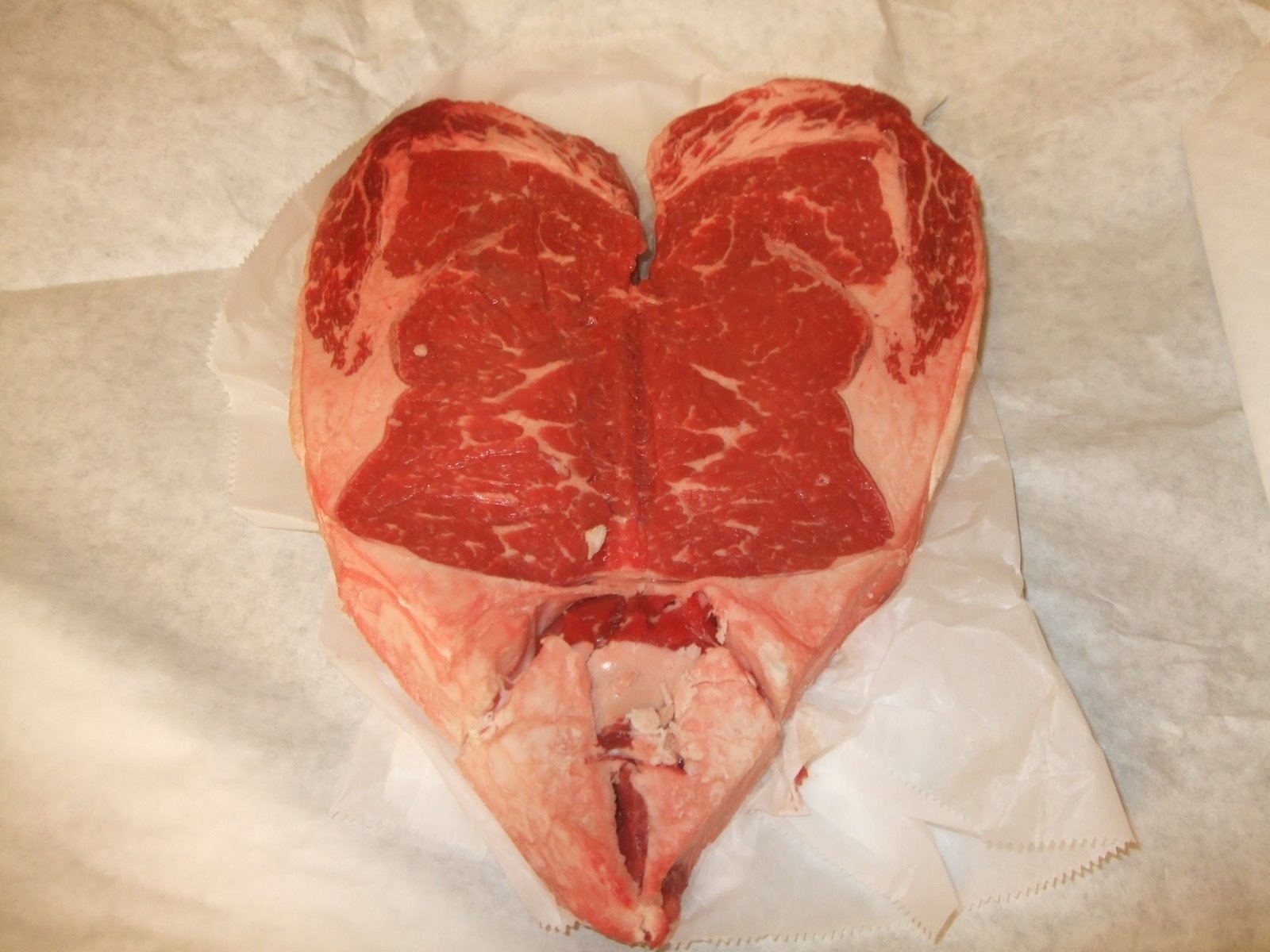
Above are two of the most recent Friendship Bread experiments. The one on the right, a whole-wheat version with honey, was quite good. Since then, however, I have developed a superior loaf with whole wheat, oats, and brown sugar. I’m setting out a new starter–I found the recipe on the Internet, of course–to make sure the recipe will work, so it will be at least 10 days before I post on this again.
2. Mashed Potatoes

It’s darn near impossible to beat the creamy, luscious tastiness of mashed potatoes. But since that lusciousness results largely from vast quantities of butter and cream, Fred and I have struggled to keep mashed potatoes on our slimmed-down menu.

I’m the problem. I pretend to be a normal cook, the kind of person who makes desserts with Kool Whip. But the truth is that I am a horrible snob when it comes to food–a dreadful, pretentious, unyielding, unforgiving snob. While others at our Weight Watchers meeting are raving about recipes that call for cake mix combined with diet soda (I only wish I were joking here), or fat-free HoHos, or the menu items at Chili’s that have less than 7 points, I can only smile weakly with supressed horror. Why are they not making cakes from scratch? Who eats at chain restaurants? And why do they not recognize that “fat-free” foods are the worst abominations of the agricultural/military/industrial complex?

My pretensions kept me from using fat-free sour cream or fat-free half and half in any mashed potato recipe. Buttermilk, which is rich but tends to be lower in fat, seemed an acceptable substitute. But the butter, with no “real” alternative, posed a thorny problem.

Luckily, I am a woefully inconsistent snob. I am a sucker for processed foods from the 1970s, the beloved companions of childhood. I will happily lap up cans of Spaghetti O’s, heaps of Hamburger Helper Lasagna, vats of Campbell’s Tomato Soup, and gallons of Kool-Aid. And it’s a good thing for these mashed potatoes that among those foods, margarine holds a special place in my heart.

My health-concious mother, lured by advertising claims that margarine was the healthy option, kept it on hand along with the wheat germ and the embarassing slices of whole-grain bread that encased our bologna sandwiches. My grandmother, across the street, was providing butter churned from cows my grandfather had milked by hand. But my palate, captivated by the salty, flavor-filled chemical overload of margarine, rejected the subtle delicacy of fresh butter. And so even today, there is always a tub of non-dairy spreadin my refrigerator–these days, it’s Brummel and Brown, which uses actual dairy products. It’s right next to the unsalted organic butter.

The Brummel and Brown is essential for this recipe if you are counting calories. If not, butter will do quite well. Roasted onions add flavor and additional liquid without resorting to a lot of cream.

Mashed Potatoes with Roasted Onion

Makes 4 servings

Preheat oven to 350. Take two whole, unpeeled onions and place on cookie sheet. Roast in oven until very soft, 45 minutes to 1 hour. Let cool slightly, cut off ends, and remove skin. When onions have about 30 minutes remaining, peel and slice potato. Place in enough salted water to cover and bring to boil. Reduce heat, cover, and simmer on medium-low heat until potatoes are very soft, about 20 – 30 minutes. Drain potatoes and place in food processor with blade inserted. Add 1 – 2 tbsp. Brummel and Brown or butter, 2 -4 tbsp. half and half, and salt and pepper to taste. Cover until Brummel and Brown has melted. Add onions and process until just smooth. Add more half and half if needed and adjust seasonings. Serve hot.

Waldorf Variations

The writeup of the Amish Friendship Bread saga is taking a bit longer than anticipated, primarily because it seems that everyone from Martha Stewart on up has something to say on the subject. While I try to sort out whether or not I should be worried about getting salmonella from starter that ferments on my countertop for 10 days, I’ll share with you a nice idea for red cabbage that I came up with on Sunday.

This recipe is a variation on Waldorf salad, a classic dish made with apples, raisins, celery, and walnuts with a mayonnaise-based dressing. I wanted to find a way to use a red cabbage and the 10 apples we bought in our efforts to save money by buying food we don’t need at a very low cost. Fred and I were pleased with the result. If you like Waldorf salad, you’ll enjoy this.

Red Cabbage Waldorf

Serves 4

1 tbsp. mayonnaise
1/4 cup fig preserves (preferably made with whole figs)
1 tbsp. red wine vinegar
2 cups red cabbage, chopped
1 slightly sour apple (MacIntosh, Braeburn, Pink Lady, or similar), cored and chopped
1/4 c. chopped walnuts
Salt to taste

Puree mayonnaise, preserves, and vinegar in food processor. Put cabbage, apple, and walnuts into a bowl and pour dressing over top. Add salt to taste. Stir. Serve cold.

Friendless Amish Bread

A couple of weeks ago, after some 20 years of effort, I finally secured a starter for Amish Friendship Bread. (Actually, “effort” might be too strong a word, since my exertions consisted primarily of watching languid thoughts meander across my brain: “Wonder if someone will ever offer me a starter for Amish Friendship Bread?”)

I’d first encountered Amish Friendship Bread when someone gave a loaf to my grandmother, and other family members had received loaves over the years. The concept was fascinating: The loaf began as a starter consisting of soured dough. The starter, filled with living cultures and bacteria and God knows what else, functioned as the leavening agent. You had to “feed” it to keep it alive, and as it grew you passed the excess along to your friends–hence the name “Friendship Bread.” Legend has it that the starter originally came from the Amish, who passed it around their community along with the recipe. But someone in the community obviously let the secret slip, and before they knew it people like me, who couldn’t even harness a buggy, were wanting to make it.

Once, in my late 20s, I asked my Granny about a loaf she’d received. “How do you make the starter?” I said.

“I don’t know,” she replied. “Someone has to give it to you.”

“But how does that person make it?”

“Well, they get it from someone else.”

“But someone HAS to know how to make the starter.”

“I don’t know,” Granny repeated. “I’ve always just heard you had to get the starter from someone. I guess it’s a secret.”

“But it has to start somewhere.”

“I think you have to have a friend give it to you,” Granny replied, probably worrying, “And how will she find any with questions like these?” quietly to herself.

I gave up. I was in grad school, and we didn’t hang around with the kind of people who gave loaves of friendship bread to each other. That was for women who made crafts and attended PTA meetings. My friends wore black, hung out in smelly coffee houses, and believed that literary theorists like us were well on our way to eliminating war, hunger, and racism. Or at least to offering a scathing critique of those who were trying.

And then there was the problem of the bread itself. Resembling a forlorn, sunken loaf of bleached banana bread, it tasted like a gluey, sickeningly sweet cross between a liquified cinnamon roll and a week-old birthday cake from the supermarket. I was able to choke down no more than a slice or two before I had to throw out the remainder of what my Granny gave me.

Still, I longed for a starter of my own. I wanted a Foucault-loving friend who would show up on the door of my apartment in a black turtleneck, a cigarette dangling from her lips, and hand over a loaf of Friendship Bread with a starter in a hand-crafted wooden bowl with the recipe carved on the side. But that friend never materialized, and my desire for starter went the same way as my plans to take the Orient Express clear through to China and marry George Clooney.

And then just the other day Carol in my office piped up, “Would you like a starter for Amish Friendship Bread?”

Would I like to marry George Clooney? (Wait. I can’t answer that question in the same way anymore. Let’s rephrase.) Do I think Fred Wise is the best husband on earth? And so I eagerly awaited the arrival of my starter, in its wooden bowl covered with a towel and accompanied by a hand-lettered recipe on a home-calligraphied index card.

I was a little surprised, a few days later, to find a Ziploc bag on my office chair, filled with what appeared to be yellowish glue, with a two-page computer printout from the Internet taped to the side. The instructions told me to “mash the bag” every day for 5 days, add 1 cup plain flour, 1 cup sugar, and 1 cup milk on day 6, and mash the bag again every day until day 10. On that day I was to create more starter by adding flour, sugar, and milk to the bag, separating the starter into more plastic bags for my friends, and then baking a loaf of bread that included “1 lrg. Box instant vanilla or choc. Pudding” in its ingredients.

Experience with Microsoft AutoCorrect suggests that the errant capitals here don’t stem from an 18th-century love of creative spelling, and I have a strong suspicion that you won’t find “instant” anything in most Amish kitchens. Still, I believe in my Friendship Bread. Ignoring the “friendship” part by hoarding every new bit of starter for myself, I’ve embarked on a new project to create a recipe that I will actually like. As I type this, several bags of starter lurk about the kitchen–enough to make 32 loaves of bread.

There have been two failures so far, one an apple-cinnamon version and a whole-wheat variety that was good warm but tasted like sawdust once it had cooled. But there was also a very successful apple-black walnut bread, and two new whole-wheat versions have just emerged from the oven. I will post recipes as soon as I get the starter thing figured out. I’ll have to find an Amish lady. Or check the Internet.

Losing the Grocery Game

I’ve mentioned in previous posts that Fred and I are not frugal people. But with this economic “downturn,” or whatever the latest euphemism is for the disaster that is our financial system, we decided that we should do a better job of saving money on groceries–provided, of course that we did not end up with crummy bruised fruit and limp lettuce just because it was on sale.

Our first attempt involved setting a monthly budget for food. After blithely sailing past the limit somewhere in the second week of the month, we were forced to accept that our “budget” was functioning as a testament to our complete lack of thrift or discipline. And so I signed up for The Grocery Game, which promises to lower your food bill by about 60% through clipping coupons and watching sales.

Theoretically, it works like this: For about $1.25 a week, I sign up to receive lists of items that are on sale at the two local stores where I shop. Every Sunday, I pull out the coupons from the Sunday paper. On a specified day of the week, I check the Grocery Game site for the updated list for each stores. The list tells you when items are at rock-bottom sale prices and when to use your coupons. You then visit the store to stock up on things while they’re at the lowest possible price.

Here’s how we’re doing so far:

Week 1, Sunday: I’ve signed up, paid my fee, and read the rules. They note that it takes roughly 12 weeks to get going with their system. On Sunday, Fred and I purchase a copy of The Durham Herald-Sun. I dutifully clip all the coupons and stack them on my desk.

Monday: Pile of coupons stuffed in my purse, I go to print the list at work. (Our printer at home has broken. We hope to buy a new one with the money we save on groceries.) I discover that the coupons on the list are in The New & Observer, not the Herald-Sun. Undaunted, I print the list anyway, selecting items I think I might need.

Saturday: After several failed attempts during the week, we finally make it to the store. I shuffle through lists and coupons, trying to find what I’m supposed to buy. We emerge some two hours later (our visits normally take about one) with $143 worth of groceries–cheaper than usual. We’re on our way.

Week 2, Sunday: We don’t get around to looking for a News & Observer until the evening. They are sold out everywhere. We go to Whole Foods, where we pick up enough food for about two meals for around $120.

Weeks 3 and 4: We travel for the holidays. We eat out a lot.

Week 5: Forget to buy N&O. Another run to Whole Foods.

Week 6: Decide to subscribe to N&O, for an additional $100 a year, to make sure we get coupons. Purchase that Sunday’s edition for $1.50. Re-read directions for list. Discover that we need to go on certain days of the week for rock-bottom sale prices. These days are different for the two stores we frequent. (Note: Whole Foods is not one of those stores.) Realize more planning may be involved than we initially thought.

Week 7: We make it to the store, with the few coupons we’ve been able to accumulate clutched in our hands. Begin to utilize “stockpiling” method (buying lots of items when they’re on sale). Buy 10 jars of salsa and mustard, 10 bags of Starbucks coffee, 10 bags of cat litter, and 10 cans of air freshener. (“We never use air freshener!” Fred exclaims. “That’s because it’s not on sale!” I respond.) At checkout, learn that there are limits on the discounts and that 2 of our groups of 10 won’t get it. Spend $248.

Realize we need shelves to store all this extra food. We’ve been told Costco has great deals on things like this as well as food. Head over to Costco. Purchase membership for $50. Buy set of shelves for $100.

Week 8: Shelves still not set up. N&O subscription has not yet been delivered. Forget to buy paper again. Discover we’ve missed sale days at both stores again this week, which is particularly disappointing since Harris Teeter had Bing cherries. Have dinner consisting of collard greens with salsa, both of which were on sale. Go to Whole Foods and discover whole chickens on sale for 99 cents a pound, not to mention wine. Spend $111.

This week: I travel for work most of the week. Fred will have to live on chicken and salsa.

Settling In

We are beginning to settle in. The transition team has been hard at work throughout our move, though we’ll be plagued by the legacy of the past for years. Items long held prisoner in a remote corner of our lives are being removed from confinement and are being returned to shelves and cabinets. The executive branch (our house) no longer contains everything, since we now have a functioning legislative division (Fred’s studio) to help things run more smoothly. And most importantly, Dick Cheney is no longer running the country, which makes the entire universe a happier place.

The move, coupled with over a month of holiday “cheer” and near-constant travel, has altered some of our eating habits. We’ve been cooking, but it’s a lot of the same stuff. So I’ll devote my first post of the new year, a mere 23 days in, not to a new recipe per se, but to report the happy discovery of a new breakfast concoction: pumpkin yogurt.

This discovery came out of Weight Watchers, which Fred and I continue despite the fact that our sole success recently is that neither of us gained more than 3 pounds over the holidays. For someone who consumed a gallon of milk per day in her youth, I’ve found it hard to meet the two-dairy-servings-a-day “Healthy Habit” advocated by WW. So I’ve resorted to this tasty combination to deal with the issue.

Pumpkin Yogurt

1/2 cup vanilla yogurt
2 tbps. canned pumpkin
Cinnamon to taste

And here’s the best part: I found out last week that it’s actually really good for you. Normally I discover that the things that I love to eat (fat, salt, lard, butter, fat, bacon, salt, and fat) aren’t really very healthy. So picture my happy astonishment when I re-read a recent article in the New York Times on “The 11 Best Foods You Aren’t Eating” and discovered that my yummy little breakfast had two of those foods (cinnamon and canned pumpkin) on the list. Can life get any better? I think not.

Chicken Livers and Sweet Potatoes in Our New House

After two months of signing papers, carrying boxes, fussing at Fred for misplacing things he’s never seen, and the other horrors associated with moving, we are finally settled in a house here in Durham. It’s only about eight blocks from the Federal and has a garage that will become an art studio. Fred is in heaven. I’m pretty happy too, because most of his paints, drawings, canvases, stretchers, tools, paintbrushes, and empty watercolors jars are no longer inside my–I mean, our–house. He has his cave, and I have my kitchen.

I am, however, beginning to suspect that we may never see each other again. Last week, as we were just starting to unpack, Fred disappeared into the basement with a load of boxes. Some time later, when he still hadn’t returned, I began to be concerned. I went to investigate.

Our basement is only partially finished. Half consists of a room with a tiled floor and finished walls, with a smaller room containing a shower, sink, and sump pump attached. The other half is unfinished and contains the heating and air conditioning system.

I entered the basement just as he was emerging from the unfinished portion. “What are you doing?” I asked.

He was aglow with pleasure. “I’ve been looking at the sump pump while you were running the washing machine upstairs! Fascinating! And just now I was checking to see how the basement was holding up after the rain. Everything looks fine.” He spread his arms out, his face beaming like a king who’s just learned his wife gave birth to an heir. “Isn’t this GREAT!?”

“Yes,” I muttered, barely able to reign in my enthusiasm–and suddenly realizing that unpacking was going to take much longer than I had planned.

While Fred explores the underbelly of our home, I’m getting the kitchen in order. Despite the chaos, the creative spirit was upon me this week. Most interesting and surprisingly good were the chicken livers and sweet potatoes we had last night. We continue our weight watching–Fred has lost 29 pounds and I’ve reached my goal of losing 15. The trick here, then, was to find a way to cook chicken livers without resorting to the default mode of frying. This method, cobbled together from James Beard and others, is simple and tasty.

Chicken Livers with Mashed Sweet Potatoes

Serves 2

1 lb. chicken livers
1 large onion, chopped
4 large garlic cloves, minced
1 tbsp. butter
1/2 cup or more red wine
Salt and pepper to taste

Melt butter in large skillet over medium heat. Saute onions until translucent. Add garlic and stir. Add chicken livers, wine, salt and pepper, and stir. Cover and cook 3 minutes. Uncover and cook until livers are done and sauce has reduced slightly, about 5 more minutes. Serve with the sweet potatoes, below.

Mashed Sweet Potatoes (from James Beard’s American Cookery)

Preheat oven to 400. Clean and dry 2 sweet potatoes and place on cookie sheet. Cook until tender, about 1 hour. Remove skins and mash with 1 tbsp. butter, salt, and lots of freshly ground pepper.